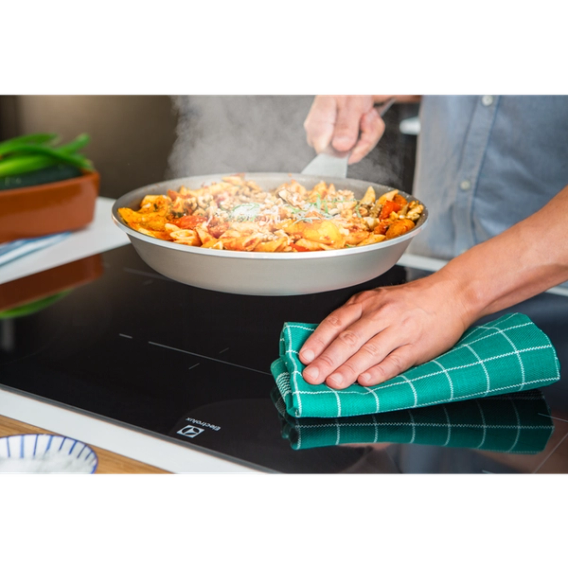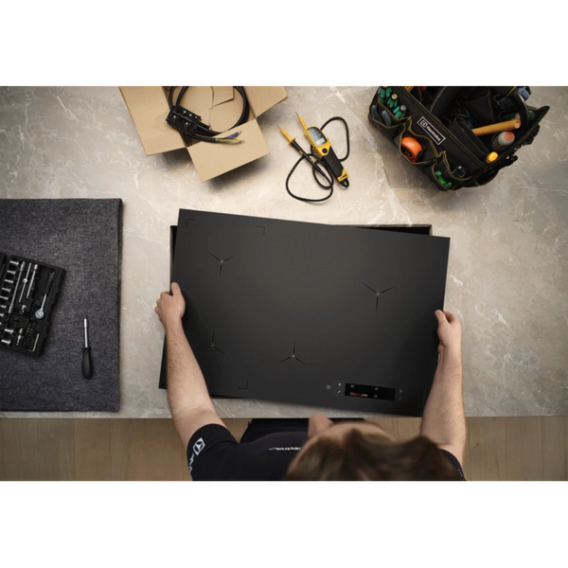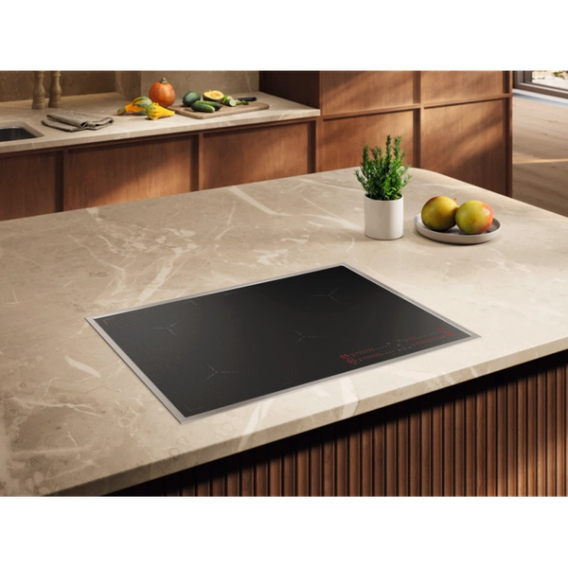

The most common hob issues I encounter are cooking zones that don't heat properly, uneven heating, induction hobs failing to detect cookware, error messages and damaged glass surfaces. In many cases, the cause is related to cookware compatibility, settings or normal wear over time. However, some problems can indicate a technical fault that requires professional inspection.
If a hob isn't heating properly, the cause can vary depending on the type of appliance. On induction hobs, it may be related to cookware detection, while ceramic or radiant hobs may have an issue with the heating element itself. If one cooking zone consistently struggles to heat or takes much longer than usual, it's a sign that the appliance should be checked.
This is one of the most common questions I receive about induction hobs. The first thing to check is whether the cookware is induction-compatible and correctly positioned on the cooking zone. If the pan is suitable and the hob still doesn't detect it, there could be an issue with the pan detection system that requires professional diagnosis.
Error codes are designed to alert you when the hob detects a condition that may affect safety or performance. In some cases, the issue can be related to overheating, cookware compatibility or ventilation around the appliance. If the same error code continues to appear after following the guidance in the user manual, professional diagnosis may be required.
Uneven heating can sometimes be caused by cookware that doesn't sit flat on the surface or by a hob that isn't completely level. However, it can also indicate a problem with a heating element or another zone-specific component. If you regularly notice inconsistent cooking results from the same zone, it's worth having the appliance inspected.
Tip: For induction hobs, a slow heat-up of the pot/pan is recommended. That way, the heat will spread evenly before cooking.
Many people are surprised to learn that some noise is completely normal with induction cooking. Depending on the cookware, power level and cooking zone being used, you may hear humming, buzzing or clicking sounds. These noises are usually related to the interaction between the cookware and the electromagnetic field. However, if the sound suddenly becomes much louder than normal or is accompanied by performance issues, it's worth having the hob checked.
If the glass surface is cracked, stop using the hob immediately. Even a small crack can affect the safe operation of the appliance and may create an electrical safety risk. Avoid using the affected area and arrange professional service as soon as possible. This is not a problem that should be ignored or temporarily worked around.